Harmful Algal Bloom in Maine
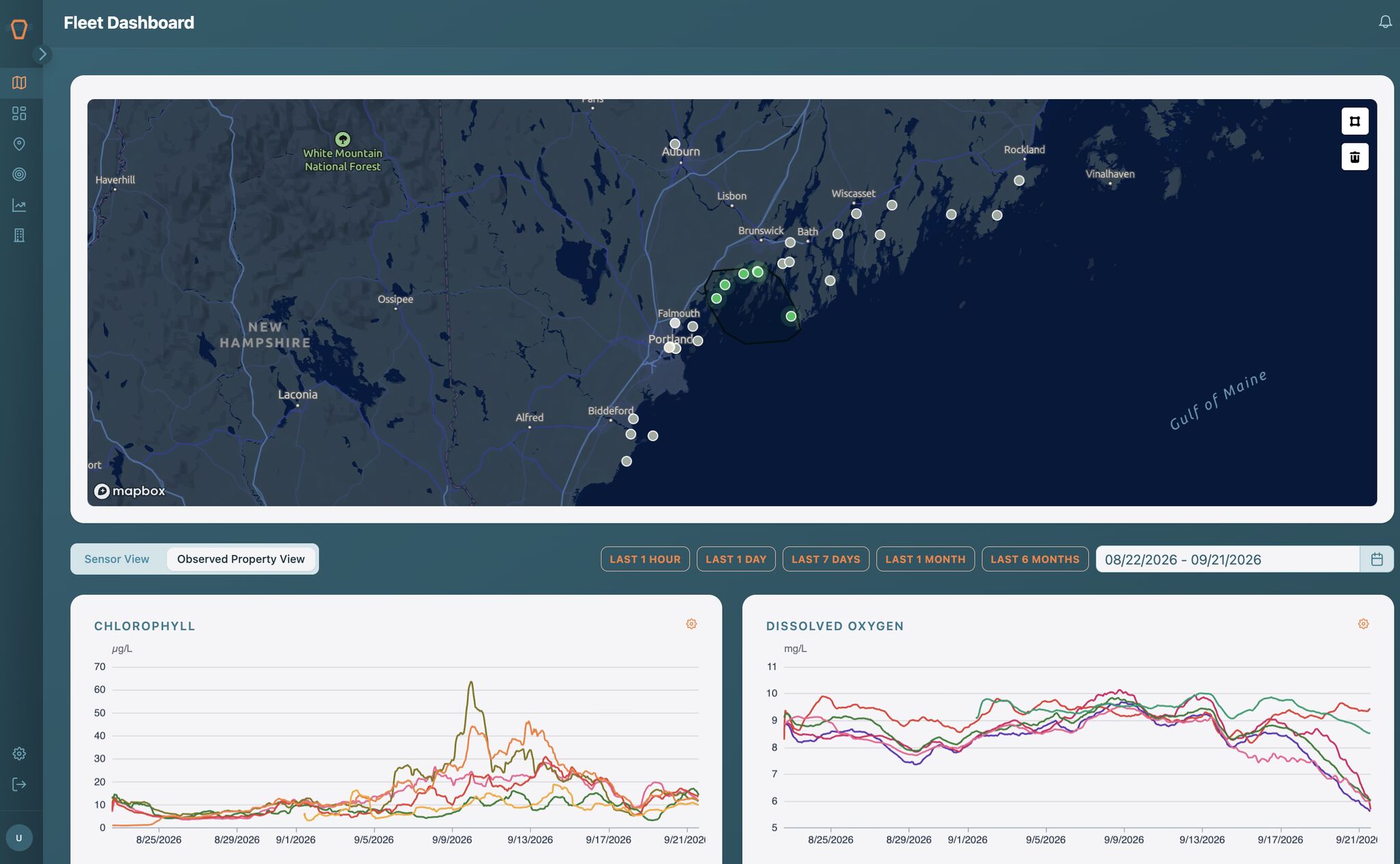
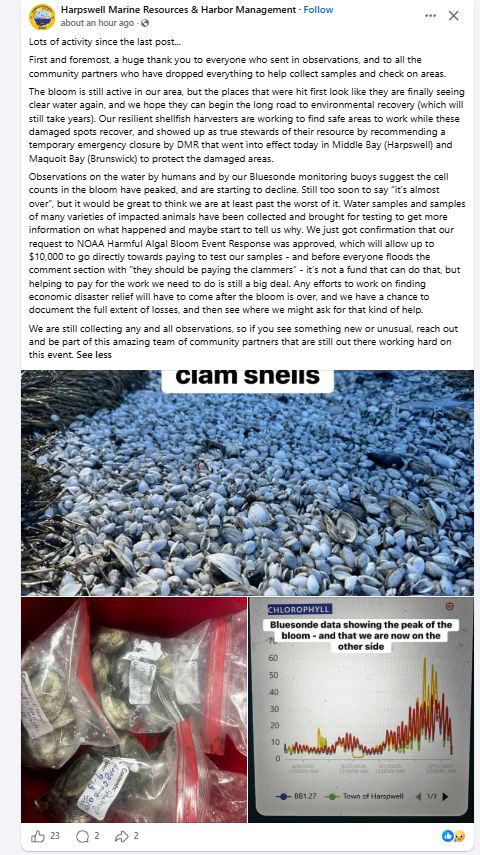
Over the past several weeks, a significant harmful algal bloom of Karenia mikimotoi has been unfolding along the Maine coast and across New England. At the same time, a couple dozen Bluesonde Buoys deployed along the Maine coast have been continuously monitoring local water conditions.
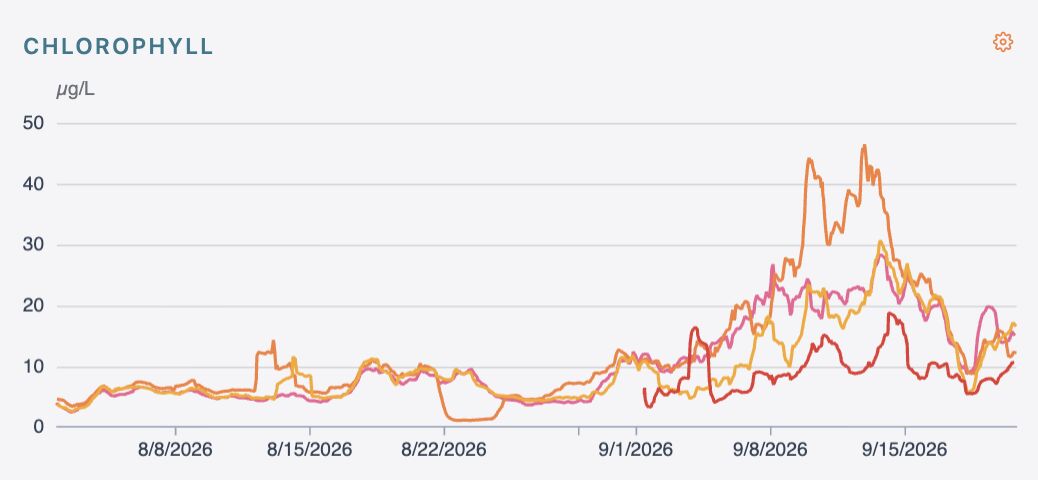
As the bloom developed, Bluesonde Buoys across multiple locations recorded increases in chlorophyll, with several sites showing large spikes in early and mid-September. In Middle Bay, for example, chlorophyll began rising sharply in early September. More recently, concentrations across several sites have begun to decline.
Chlorophyll measurements can't identify K. mikimotoi specifically, but continuous monitoring can show when conditions begin changing, how quickly they change, and how those conditions evolve over time.
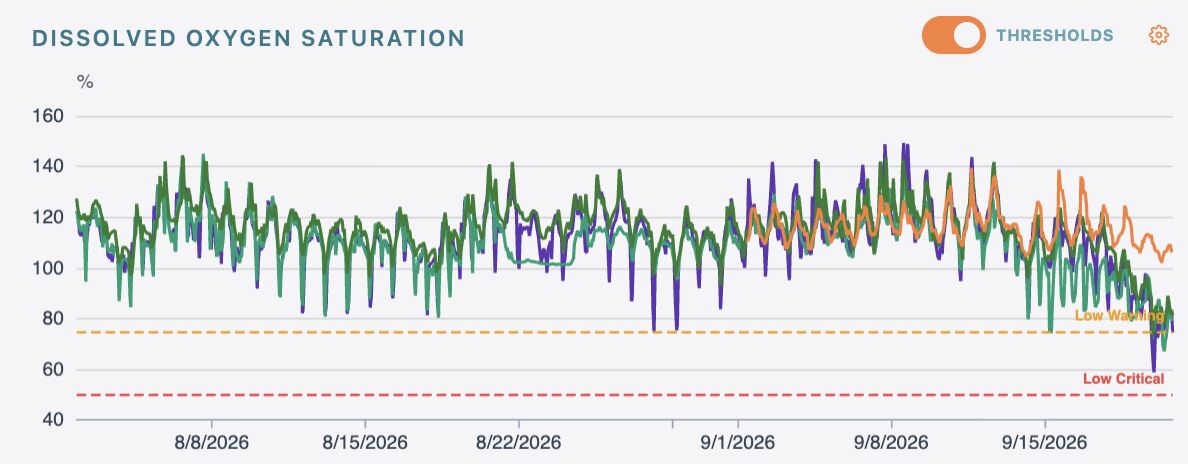
We've also been hearing directly from farmers during the bloom, including requests to configure dissolved oxygen alerts and share nearby buoy data with one another. As chlorophyll concentrations decline, attention is now turning to dissolved oxygen, which can drop as a bloom decays. The Bluesonde Dashboard's configurable alerts can help farmers keep track of these changing conditions in real time.
We're working on making more of this data publicly accessible so farmers, researchers, resource managers, and coastal communities can more easily see what's happening in the water around them.
Thanks to Harpswell Marine Resources & Harbor Management, Maine Aquaculture Innovation Center, University of Maine Darling Marine Center, and the many farmers and researchers collecting samples, sharing observations, and helping communities understand how this bloom is evolving.